
Best Grout for Florida Bathrooms: Sanded vs Epoxy
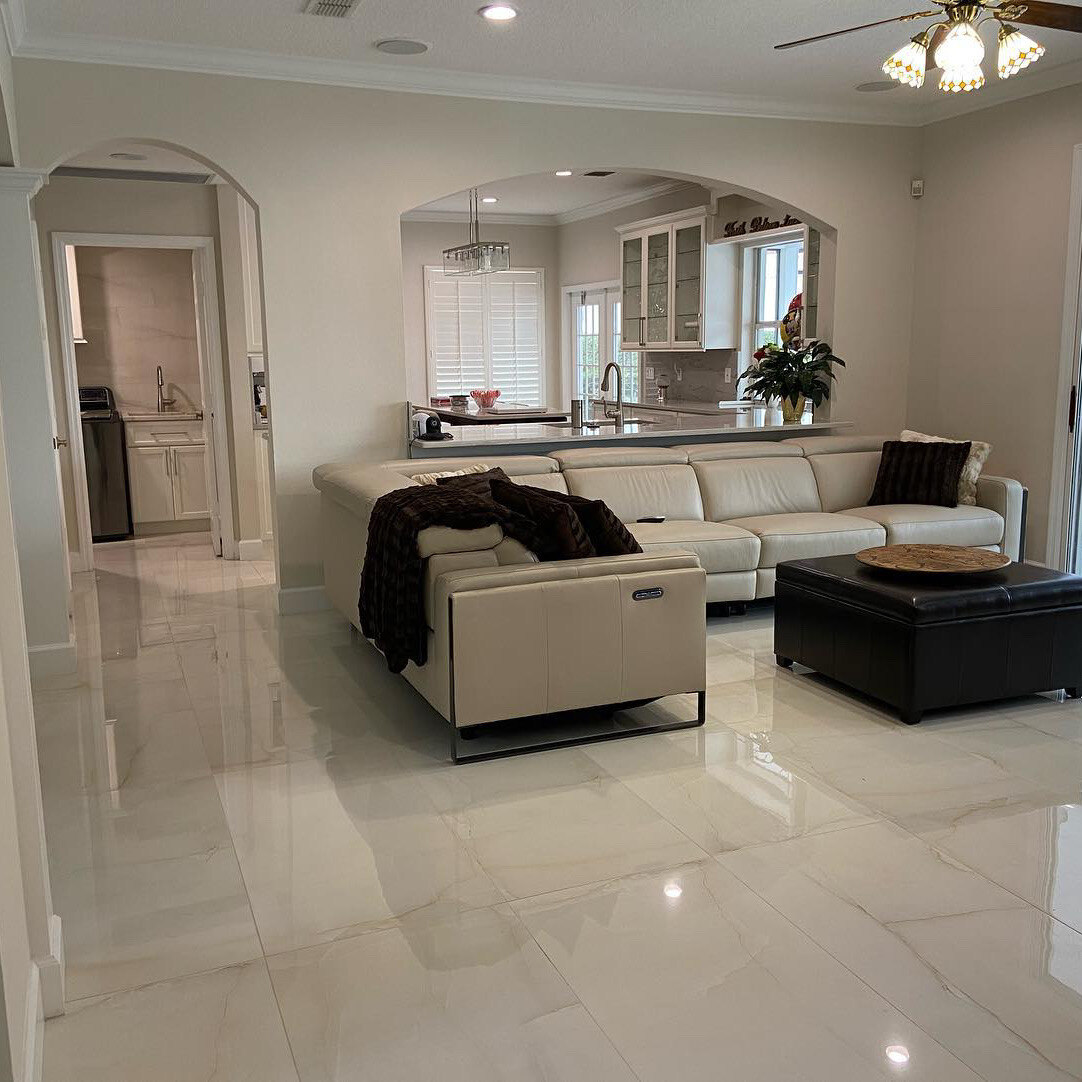 Sanded vs Epoxy Grout Florida
Grout gets almost no attention during a bathroom remodel until it starts turning gray, cracking, or growing mildew a year later. In Central Florida's humidity, the grout you pick affects how often you're scrubbing mold out of your shower and how long your tile job actually lasts. The two main options homeowners choose between are traditional sanded (cement-based) grout and epoxy grout, and the right pick depends on where in the bathroom you're using it.
How sanded grout performs in humid bathrooms
Sanded grout is cement-based, affordable, and easy for most tile crews to work with, which is why it's still the default on a lot of jobs. The problem in our climate is porosity. Cement grout absorbs moisture, and in a shower that never fully dries out between uses, that moisture creates the perfect environment for mildew to take hold in the grout lines, especially in showers with poor ventilation.
Sealing sanded grout helps, but it's not a one-time fix. Sealer wears down with regular cleaning and water exposure, so you're looking at resealing every year or two to keep it performing. Skip that maintenance and you'll see the grout darken, stain, and eventually need to be re-grouted well before the tile itself shows any wear.
Why epoxy grout holds up better long-term
Epoxy grout is resin-based instead of cement-based, which makes it essentially non-porous. It doesn't absorb water, doesn't need sealing, and resists staining and mildew far better than sanded grout in constantly wet areas like shower floors and walls. For a bathroom renovation where you want to minimize maintenance for years instead of months, epoxy is the stronger long-term choice.
The tradeoff is cost and installation difficulty. Epoxy grout is more expensive per bag and it sets up faster, which means it has to be worked by someone experienced with it or you end up with a messy, uneven finish that's hard to correct after the fact. It's also less forgiving to install in large areas because of that faster working time.
Where each type makes the most sense
Sanded grout still makes sense on bathroom floors outside the shower, where moisture exposure is lower and the cost savings add up on larger square footage. It's a reasonable, proven choice as long as you're willing to keep up with sealing.
Epoxy earns its keep inside the shower enclosure itself - walls, floor, and especially the grout lines around the shower pan or curb where standing water is most common. Some homeowners also choose epoxy for the whole bathroom floor if they want one consistent low-maintenance surface throughout the room, particularly in a home with kids or pets where cleaning time matters.
Grout color and joint width also matter
Regardless of which type you choose, lighter grout colors show dirt and mildew staining faster than mid-tone or darker grays and browns. In a shower, a darker grout color buys you time between deep cleans even with a quality product.
Joint width plays a role too. Narrower grout lines mean less total grout surface exposed to water and less area for mildew to take hold, which is one more reason large-format tile with tight joints has become popular in Florida bathrooms.
Our honest recommendation: use epoxy grout in the shower itself where water sits and mildew is the real enemy, and save sanded grout for lower-moisture areas like the rest of the bathroom floor if you want to control costs. Whichever you choose, factor grout maintenance into your decision from the start rather than as an afterthought - it's the detail that determines whether your tile job still looks new in five years or needs attention after year one.
Ready to stop living around a to-do list?
Get a free, no-pressure estimate and a real timeline — usually within 24 hours.