
Best Flooring for a Florida Lanai or Enclosed Porch
 Best Flooring Florida Lanai Porch
A lanai or enclosed porch in Central Florida lives a different life than the rest of your house. It gets blasted with sun through screens or glass, soaks up humidity swings between morning and afternoon storms, and often takes on water from wind-driven rain even when it's technically "enclosed." Not every flooring product is built for that. Here's what actually holds up and what to skip.
Tile is still the safest bet
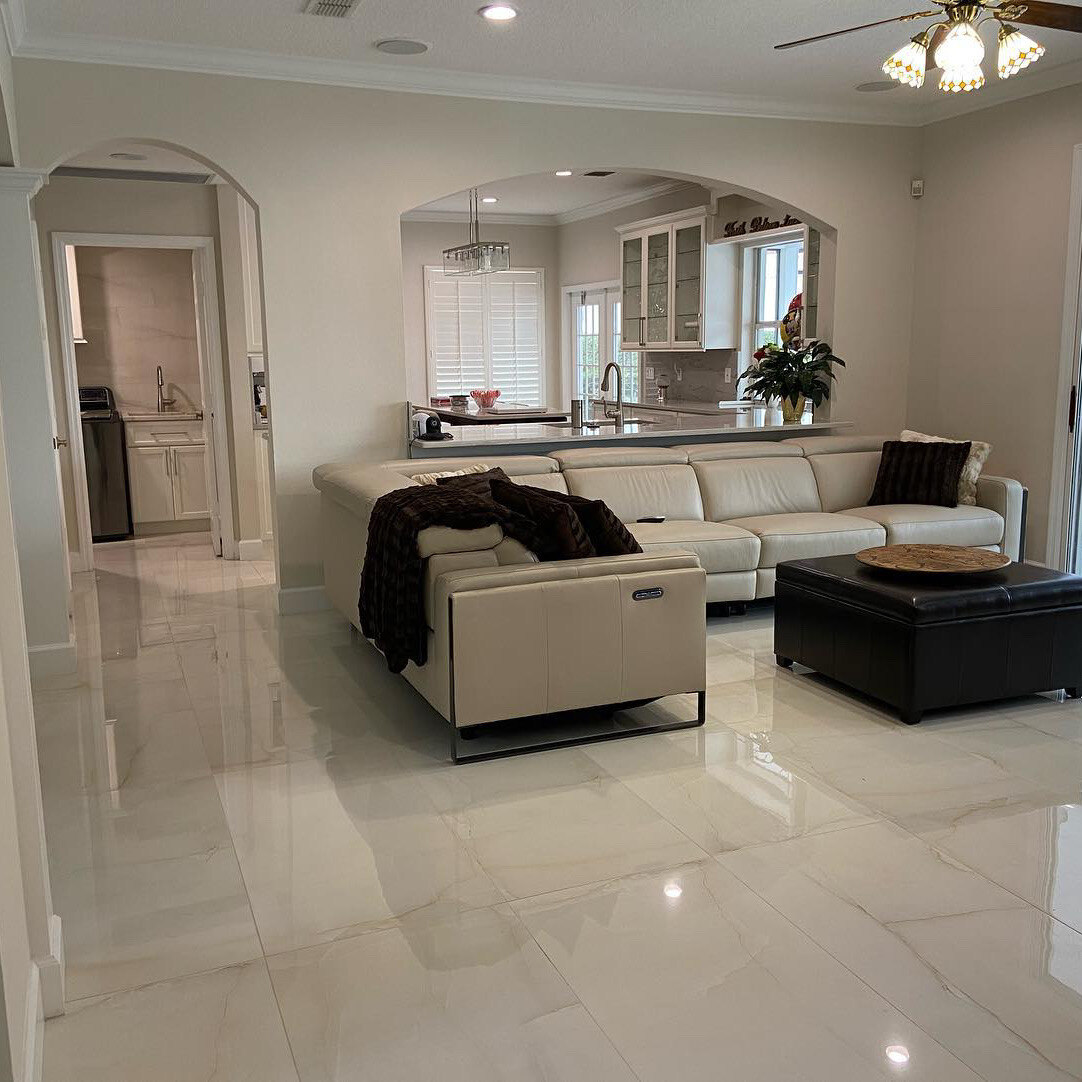
Porcelain tile remains the top choice for lanais and enclosed porches for a reason: it doesn't care about moisture, it handles temperature swings without expanding or contracting the way wood-look products can, and it's easy to clean when pollen, dirt, and leaf debris blow in. Look for a tile with a slip-resistant finish, especially if the space connects to a pool deck or stays damp after rain. Large-format tile also cuts down on grout lines, which means less cleaning and fewer spots for mildew to take hold.
Epoxy and polyaspartic coatings for a modern, seamless look
If your lanai has an existing concrete slab and you want something durable without the cost of new tile, a coated floor is worth considering. Epoxy and polyaspartic coatings create a seamless, easy-to-clean surface that resists staining from mildew, fertilizer, and pool chemicals. The tradeoff is UV exposure - not every coating formula is rated for direct sunlight, so if your lanai is only screened rather than glassed in, ask specifically about UV-stable products before committing. A coating that yellows or chalks after a summer of sun exposure isn't doing its job.
Why standard laminate and most hardwood are off the table
Laminate and solid hardwood are built around moisture control, and a lanai is one of the hardest places in the house to control moisture. Even a fully enclosed porch with air conditioning will see more humidity swings than an interior room, especially if it has sliding glass doors that get opened and closed throughout the day. Over time, that moisture works into seams and edges, causing warping, buckling, or cupping. If you love the look of wood, a waterproof vinyl plank made for this kind of exposure is a much safer route than an actual wood product.
Waterproof vinyl plank works if the space is truly climate-controlled
For enclosed porches that are fully conditioned - meaning they have real air conditioning and heating, not just a ceiling fan and screens - a quality waterproof vinyl plank can work well. It gives you a wood look without the risk of warping, and it stands up fine to normal humidity. What it won't tolerate is direct, sustained UV exposure through unshaded glass, which can fade the wear layer and cause discoloration over time. If your porch gets hours of direct afternoon sun, tile or a coated floor is the more reliable choice.
Our honest recommendation
If your lanai is screened only, or gets significant direct sun, go with tile or a UV-rated epoxy coating - they're the only two products that shrug off heat, humidity, and sun without special conditions. If it's a fully enclosed, air-conditioned porch with limited direct sun exposure, waterproof vinyl plank is a solid option that gives you more design flexibility. Skip laminate and solid hardwood entirely in this space; the moisture swings will catch up with them eventually, even with the best installation. When in doubt, walk us through your specific porch setup - sun exposure, enclosure type, and how it connects to the rest of your home - and we'll point you to the product that will actually last.
Ready to stop living around a to-do list?
Get a free, no-pressure estimate and a real timeline — usually within 24 hours.