
Best Flooring for a Florida Kitchen: What Actually Holds Up
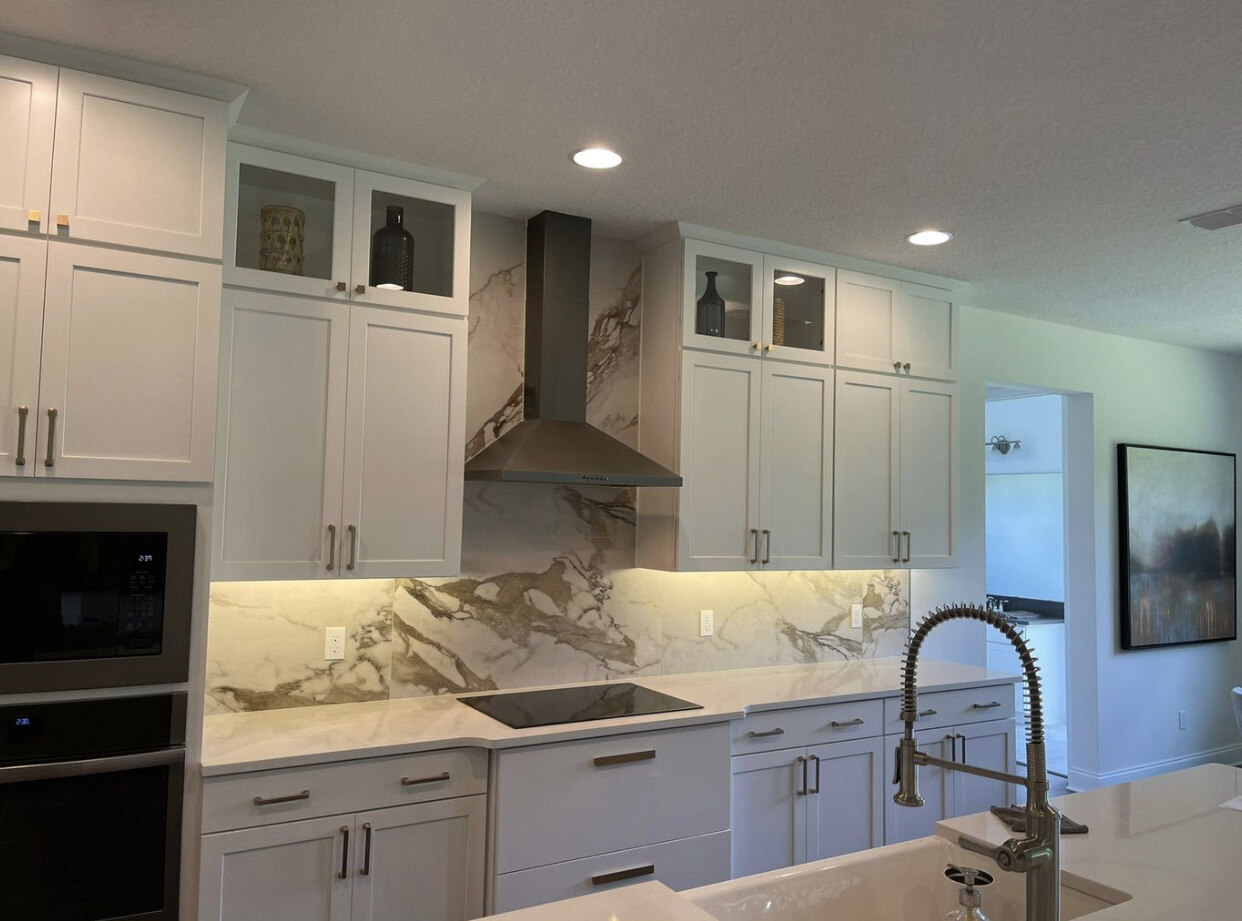 Best Flooring for Florida Kitchen
Your kitchen floor deals with more abuse than almost any other surface in your house - water from the sink, grease splatters, dropped cast iron, kids running through with wet feet, and Florida's year-round humidity working against everything from below. Picking the wrong material means regrets within a year or two. Here's an honest breakdown of what actually performs well in a Central Florida kitchen.
Luxury vinyl plank is the safest bet for most homeowners
LVP has become the default recommendation for Central Florida kitchens for good reason. It's fully waterproof at the surface level, which matters when your dishwasher line leaks overnight or your fridge's ice maker line fails while you're at work. It's also softer underfoot than tile, which matters if you spend a lot of time standing at the counter cooking. Modern LVP also handles humidity swings without expanding, contracting, or cupping the way solid wood can.
The tradeoff is that LVP isn't indestructible - a dropped cast iron skillet can dent or scratch some products, and cheap, thin planks will show wear faster than thicker, wear-layer-rated options. Spend the extra money on a quality product with a thicker wear layer if the kitchen is going to see daily traffic.
Tile is still the most durable option, if you can live with the drawbacks
Porcelain and ceramic tile are essentially immune to water damage and will outlast almost any other flooring option in a kitchen. If you want a floor that will look the same in twenty years, tile is hard to beat. It also handles Florida humidity without any concern for moisture-related warping.
The downside is comfort and forgiveness. Tile is hard and cold underfoot, and it's unforgiving if you drop a glass or a plate - things shatter on tile that would just bounce on vinyl. Grout lines also need maintenance over time, especially in a kitchen where grease and spills are inevitable. If you go this route, ask about grout options that resist staining better than standard sanded grout.
Laminate and hardwood are the riskier choices in a kitchen
Laminate flooring has come a long way, and some water-resistant laminate products can survive minor spills if you clean them up quickly. But laminate is still not a good match for a kitchen that sees regular water exposure - a core made of compressed wood fiber will eventually swell if water sits on a seam for too long.
Solid hardwood is even riskier. It looks great, but wood and water don't mix, and Florida's humidity levels put extra stress on solid wood floors even in rooms without direct water exposure. If you love the look of wood in your kitchen, engineered hardwood with a quality finish or a wood-look LVP will get you the aesthetic without the maintenance headaches.
Don't ignore the subfloor and transition points
No matter which material you choose, the biggest failure points in a kitchen floor are usually at the edges - around the dishwasher, under the sink cabinet, and at doorway transitions. A proper installation with correctly sealed seams and transitions matters more than the brand of flooring you buy. This is also where cutting corners on installation costs homeowners the most down the road, since a small leak that seeps under an improperly sealed edge can cause hidden damage for months before it's noticed.
For most Central Florida kitchens, a quality waterproof LVP strikes the best balance of durability, comfort, and cost, with tile as the better choice if you're prioritizing maximum longevity over comfort underfoot. Whichever you choose, don't skimp on installation quality around water sources - that's where kitchens actually fail. If flooring is one part of a larger renovation, plan it together with the cabinets, counters, and backsplash through a coordinated kitchen remodeling project.
Ready to stop living around a to-do list?
Get a free, no-pressure estimate and a real timeline — usually within 24 hours.